
Contenido
The “Orange Plague” Statue at the European Parliament, Explained
The sculpture depicts a naked Donald Trump seated on the back of a smaller, thin figure who appears to buckle under his weight. One hand clutches a long golf club; the other holds the scales of justice. A golf ball rests alongside. In its earlier public displays, the figure stood on a pedestal bearing the words “The Orange Plague.”

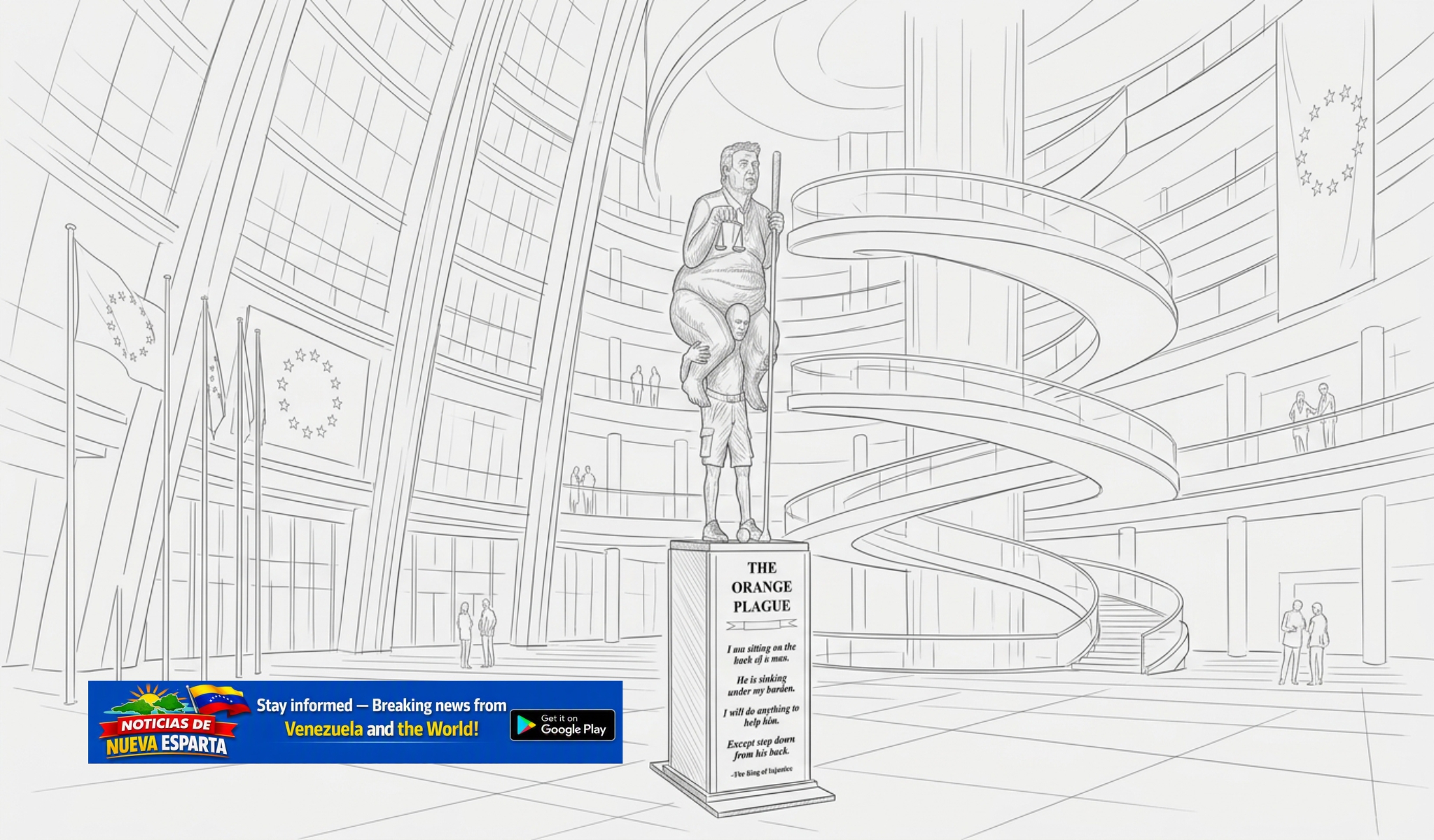
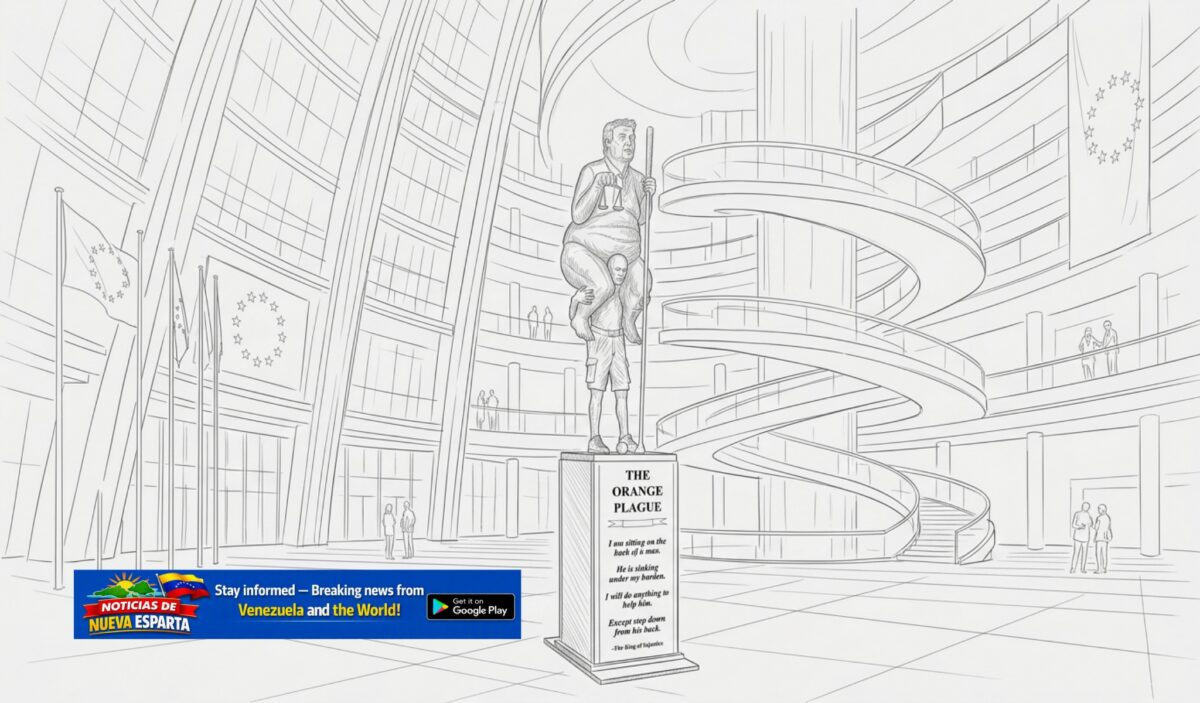
The “Orange Plague” is a satirical, gold-leaf-covered sculpture of Donald Trump, created by Danish artist Jens Galschiøt and organized for exhibition by Danish MEP Per Clausen. It went on display inside the European Parliament building in Strasbourg

France, on Tuesday, Oct. 6, 2026, and is scheduled to remain there only until Thursday, Oct. 8. The roughly 2.5-meter (8-foot) work — also billed as “King of Injustice” — depicts a nude Trump seated on the back of a smaller figure, clutching a long golf club and the scales of justice.
Key takeaway: A Danish artist’s traveling protest sculpture has landed in one of the world’s most visible democratic institutions — and it is scheduled to stay for just a few days, making the display as much a statement about political satire and free expression as about its subject.
Table of contents
- What is the “Orange Plague” statue?
- Why it’s at the European Parliament — and why it matters worldwide
- What the sculpture shows and means
- Benefits and opportunities
- Risks and trade-offs
- Human impact
- Planetary impact
- What to do next
- FAQ
What is the “Orange Plague” statue?
“The Orange Plague” is a gold-covered satirical sculpture of U.S. President Donald Trump, made by Danish sculptor Jens Galschiøt. It went on display inside the European Parliament in Strasbourg on Tuesday, Oct. 6, 2026, organized by Danish MEP Per Clausen, and it is scheduled to remain on view until Thursday, Oct. 8.
Key facts about the work itself:
- Artist: Jens Galschiøt, a Danish sculptor born in 1954 and best known for the “Pillar of Shame” series. He works from a large workshop and gallery in Odense, Denmark.
- Size and materials: About 2.5 meters (roughly 8 feet) tall, covered in 23-karat gold leaf.
- Alternate title: The piece is also presented as “King of Injustice.”
- First appearance: It was created for the COP30 United Nations climate summit in Belém, Brazil, in November 2025, and has since appeared in public several times — including at the Munich Security Conference.
- Setting: Strasbourg is the European Parliament’s official seat, and the sculpture is on display inside the Parliament building as part of a temporary exhibition this week.
Why it’s at the European Parliament — and why it matters worldwide
The exhibition was organized by Per Clausen, a left-wing Danish member of the European Parliament, who invited the artist to bring the work to Strasbourg. According to the organizers’ announcement, Clausen argues that the Parliament is a fitting stage for the sculpture’s message, given the questions it raises about the direction of U.S. policy and the global order.
That decision turned a Danish art project into a global news story within hours — coverage spread across at least three continents in a single day, from CNN and USA Today to DW, The Independent, The Straits Times, and The Times of India. Images of American political power circulate worldwide, and different places read them differently.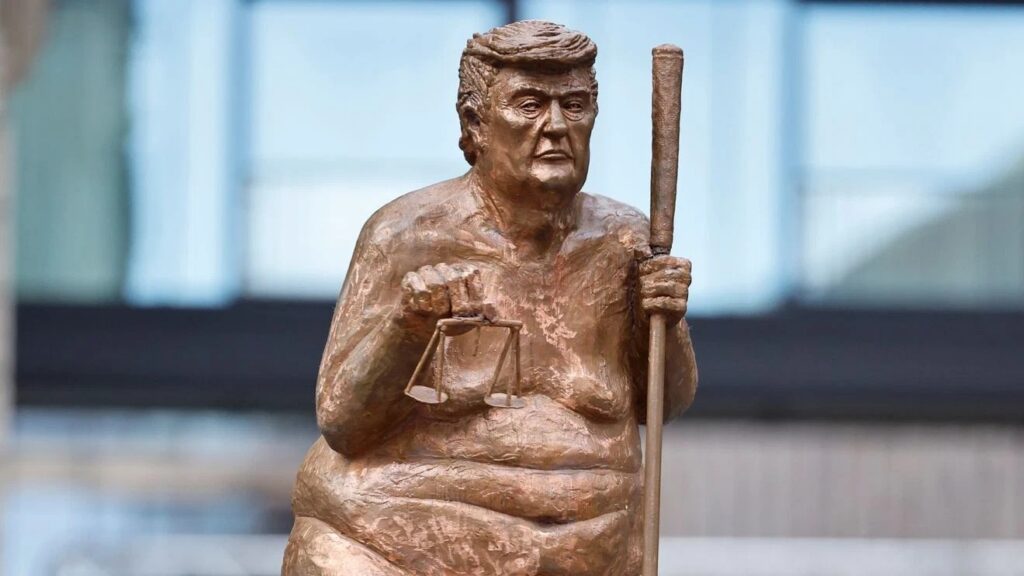
Three threads explain the global relevance:
- A sitting U.S. president, exhibited in a foreign legislature. It is unusual for a work this pointed about a serving head of state to be displayed inside a major international institution — and the imagery travels instantly on social platforms.
- Political satire as a test case. How democratic institutions handle provocative art — hosting it, restricting it, or arguing about it — is watched closely far beyond Europe. Galschiøt’s own best-known work, the “Pillar of Shame,” was taken down in Hong Kong, and the artist says he has been fighting to recover it. The contrast between venues that show and venues that silence is part of the story.
- Climate politics. The sculpture was born as a critique tied to U.N. climate negotiations, and it re-enters public view at a time when environmental policy remains a central axis of transatlantic debate.
What the sculpture shows and means
The sculpture depicts a naked Donald Trump seated on the back of a smaller, thin figure who appears to buckle under his weight. One hand clutches a long golf club; the other holds the scales of justice. A golf ball rests alongside. In its earlier public displays, the figure stood on a pedestal bearing the words “The Orange Plague.”
The artist’s own framing is explicit. On his website, Galschiøt describes the work as “a satirical out-cry against Trump and the U.S. assault on the green transition and the rule-based world order.” His site also includes a short poem that begins: “With his eyes closed and scales in hand, the Orange Plague proclaims: I am sitting on the back of a man. He is sinking under my burden.”
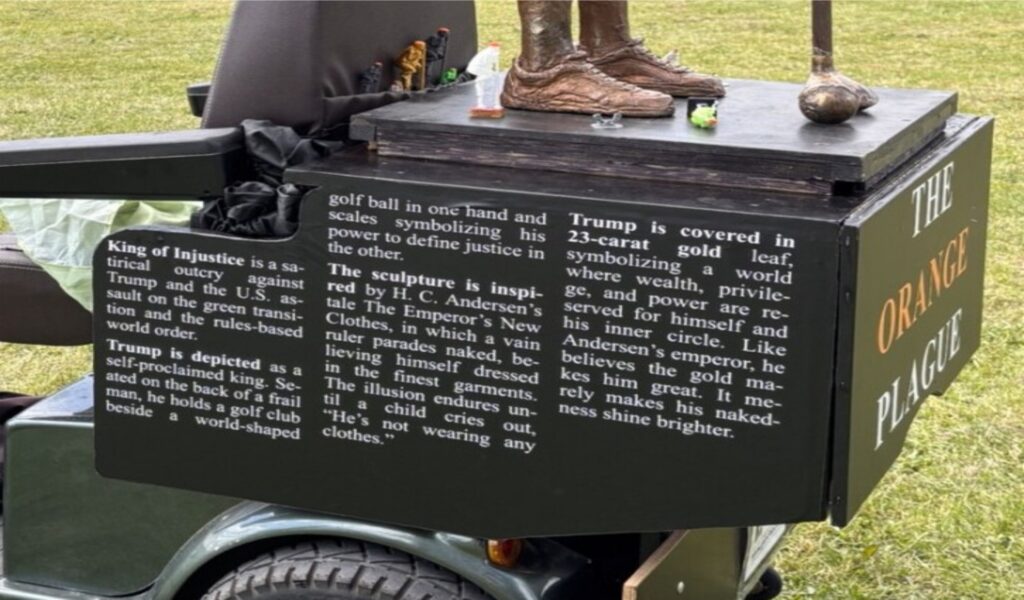
The imagery draws on several recognizable references:
- The “naked emperor.” The work echoes the fairy tale “The Emperor’s New Clothes” — a leader exposed by his own vanity.
- The gilded idol. The 23-karat gold coating plays on Trump’s well-documented fondness for gold. Galschiøt told CNN: “Trump likes gold. In a way, I think he would like this sculpture.”
- The burden. The smaller figure personifies the people carrying the costs of power, a metaphor the artist repeats in interviews. Asked what he would tell the president face to face, Galschiøt told HuffPost: “Get off our backs.”
- Laughter as resistance. “Dictators don’t like you laughing at them,” Galschiøt has said, explaining why he makes protest art instead of policy papers.
Benefits and opportunities
For supporters, the Strasbourg display illustrates several genuine benefits:
- Satire as civic speech. Political satire has a long, protected tradition in democracies; parliaments are among the most appropriate places to encounter dissent and criticism, not only agreement.
- A spotlight on policy debates. The sculpture directs attention to the specific arguments its creator cares about — climate policy, the rule of law, and the responsibilities of powerful states — the kind of attention that a press release rarely achieves.
- Institutional self-testing. By hosting a challenging artwork, the Parliament demonstrates the difference between debating criticism and suppressing it — a contrast the artist himself emphasizes.
- Visibility for Danish and European political culture. A Danish MEP and a Danish artist reached a global audience, showing smaller countries can shape international conversations.
- A live civics lesson. Visitors and staff get a first-hand example of how democratic institutions handle uncomfortable speech.
Risks and trade-offs
The same display carries real costs and questions, acknowledged even by its organizers: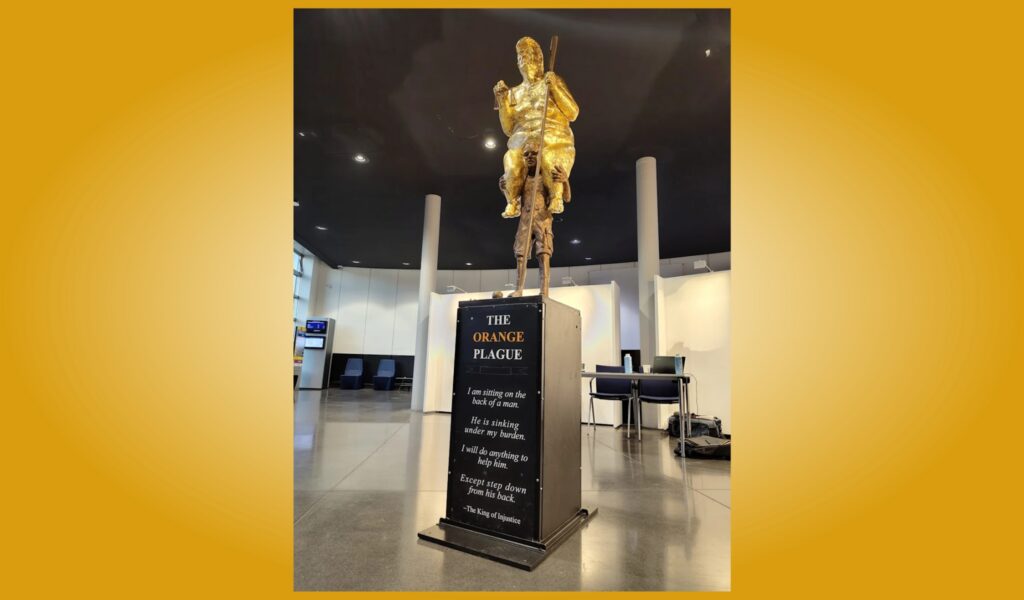
- Provocation and diplomacy. Some observers argue that exhibiting a mocking depiction of a sitting U.S. president risks inflaming diplomatic relations. Clausen acknowledged this view directly: “I know some people think we shouldn’t provoke Trump and therefore shouldn’t exhibit a sculpture like this,” he said in a statement.
- Polarization. Satire aimed at one side of a divided electorate can harden positions rather than open debate; the nudity and the taunting title will read very differently depending on where viewers stand.
- Institutional questions. The exhibition is organized by an individual MEP rather than as a Parliament-wide initiative — which raises the question of where the line runs between an institution’s neutrality and its members’ right to speak.
- Backlash and thin skin. Clausen has said he is not worried about a reaction from the U.S. president, and offered a combative defense: “If someone is so thin-skinned that they cannot tolerate this sculpture being exhibited in the European Parliament, then they have no place on the world stage.” Whether that confidence proves warranted is one of the open questions of the week.
Human impact
The most immediate human effect is conversational: the sculpture has generated sharply divided reactions in news commentary and on social media — praise as incisive satire, criticism as an insult dressed as art. Clausen said the response to the statue has been positive among those engaging with it, though that reflects his own perspective as its host.
Groups affected in different ways:
- MEPs and parliamentary staff encounter the work directly during the session week — some as a statement they welcome, others as an embarrassment in their workplace.
- The artist gains a global platform, but also criticism; his career has shown both the reach and the risk of protest art (his “Pillar of Shame” was removed in Hong Kong, and he says he is still fighting to recover it).
- Ordinary viewers are invited, through the smaller burdened figure, to see themselves as the subjects of the artwork’s metaphor: the people who carry costs imposed from above.
- Supporters and opponents of the U.S. president may find their prior views reinforced rather than challenged — the common fate of political caricature.
The display’s real-world footprint on daily life is modest — its significance is civic and symbolic rather than economic or physical. It aims to shift how people talk about power; whether it does is unresolved.
Planetary impact
The sculpture’s direct environmental footprint appears small and is not publicly documented: one gilded object that has traveled from Denmark to a handful of venues in Brazil, Germany, and France. Gold leaf has real supply-chain costs, and long-distance art transport produces emissions — but no figures have been published for this work, so precise footprint claims would be speculation.
Honest framing:
- What we know: The work was created as a critique of what the artist calls the assault on the green transition — its environmental significance is chiefly symbolic and political.
- What we don’t know: Materials sourcing, weight, and shipping details are undocumented; treat specific environmental claims about the statue itself with caution.
- The balanced view: A single artwork is not an environmental crisis in either direction — it is a message about environmental policy, delivered through a modest physical object.
What to do next
Practical, lawful, and useful steps — whether you support the message, oppose it, or just want the facts:
- If you’re in or near Strasbourg and hope to see it: confirm details with official sources before traveling. The display is scheduled to remain only until Oct. 8, and access to the Parliament building runs through the European Parliament’s visitor arrangements.
- Read the primary materials: the artist’s page for the work and the organizers’ announcement give the fullest versions of the statements that media reports quote in fragments.
- Separate claims from facts when sharing. The sculpture is the artist’s opinion in physical form; the display dates, organizer, and title are the verifiable news core.
- Follow the next chapter. Galschiøt’s works travel — the “Orange Plague” appeared at COP30 and the Munich Security Conference before Strasbourg, and further stops have not been ruled out.
- For educators and journalists: use the sources listed below, and note that this piece involves nudity and political caricature — contextualize before presenting it to audiences.
FAQ
What is “The Orange Plague” statue?
It’s a roughly 2.5-meter (8-foot) satirical sculpture of Donald Trump, covered in 23-karat gold leaf, created by Danish artist Jens Galschiøt. It is also presented under the title “King of Injustice” and is currently on display inside the European Parliament in Strasbourg.
Who organized its display at the European Parliament?
Danish MEP Per Clausen, a member of the left-wing Red-Green Alliance (part of the Left group in the Parliament), organized the exhibition and invited the artist, according to the organizers’ announcement and multiple news reports.
Where exactly is the statue, and how long will it stay?
It is on display inside the European Parliament building in Strasbourg, France — the Parliament’s official seat. It went on view Tuesday, Oct. 6, 2026, and is scheduled to remain on display only until Thursday, Oct. 8.
What does the sculpture depict?
A nude Donald Trump seated on the back of a smaller, thinner man who appears to struggle under the weight, holding a long golf club and the scales of justice. The artist describes it as satire aimed at Trump’s record and rhetoric; the imagery deliberately echoes “The Emperor’s New Clothes.”
Why is the display controversial?
It combines nudity, mockery of a sitting head of state, and an institutional setting. Supporters call it legitimate political satire; critics call it a provocation that risks diplomatic friction. Even its organizer acknowledges that “some people think we shouldn’t provoke Trump.”
Did Trump or the White House respond?
As of Wednesday, Oct. 7, no response from the White House had been reported in the coverage reviewed. Clausen has said he is not worried about a reaction from the U.S. president.
Conclusion
At its core the story is straightforward: a Danish sculptor made a pointed, gilded satire; a Danish MEP brought it inside the European Parliament; it is scheduled to leave again on Thursday, Oct. 8. What makes it worth understanding is everything around those facts — how publics react to satire aimed at power, and how open institutions handle art some find embarrassing and others find brave. Keep the facts straight, take the arguments as arguments, and watch what happens next; the debates this piece started will outlast its visit to Strasbourg.
Sources and further reading
- Golden naked Trump statue installed at European Parliament — CNN, Oct. 7, 2026
- Nude gold statue of Trump ‘Orange Plague’ unveiled — USA Today, Oct. 7, 2026
- Naked Trump statue goes on display in Strasbourg — DW, Oct. 2026
- Naked statue of Trump named ‘Orange Plague’ unveiled at European Parliament — The Independent, Oct. 7, 2026
- Gigantic Naked Trump Statue Lands In European Parliament — HuffPost, Oct. 7, 2026
- Naked Trump Statute Goes on Display in European Parliament — The New Republic, Oct. 2026
- All gold, no clothes: ‘Orange Plague’ statue brings naked Trump to EU Parliament — The Straits Times, Oct. 7, 2026
- Naked statue of Donald Trump unveiled and it’s called the ‘Orange Plague’ — Metro (UK), Oct. 7, 2026
- Trump as ‘orange plague’: Gold-covered naked statue of US president unveiled at European Parliament — The Times of India, Oct. 7, 2026
- Gold Naked Statue of Donald Trump Displayed at European Parliament — Newsweek, Oct. 7, 2026
- Exhibition of Jens Galschiøt’s “Orange Plague” in the European Parliament — Enhedslisten (Red-Green Alliance), Oct. 2026
- The Orange Plague — Jens Galschiøt (artist’s site)
- Protests return to climate summit with calls for Indigenous rights — Politico, Nov. 15, 2025 (COP30 context)
- Jens Galschiøt — Wikipedia (biographical details)
- European Parliament Contemporary Art Collection — European Parliament (artist profile context)
- European lawmaker dares Trump to complain about his statue — Raw Story, Oct. 7, 2026 (no White House response reported)
golden Trump statue European Parliament, naked Trump statue Strasbourg, Jens Galschiøt sculpture, King of Injustice statue, Per Clausen MEP exhibition, European Parliament art display, orange plague statue, golden trump statue, european parliament, strasbourg, jens galschiot, king of injustice, political satire, per clausen, cop30, world news, europe,
Discover more from Noticias de Nueva Esparta
Subscribe to get the latest posts sent to your email.

You must be logged in to post a comment.